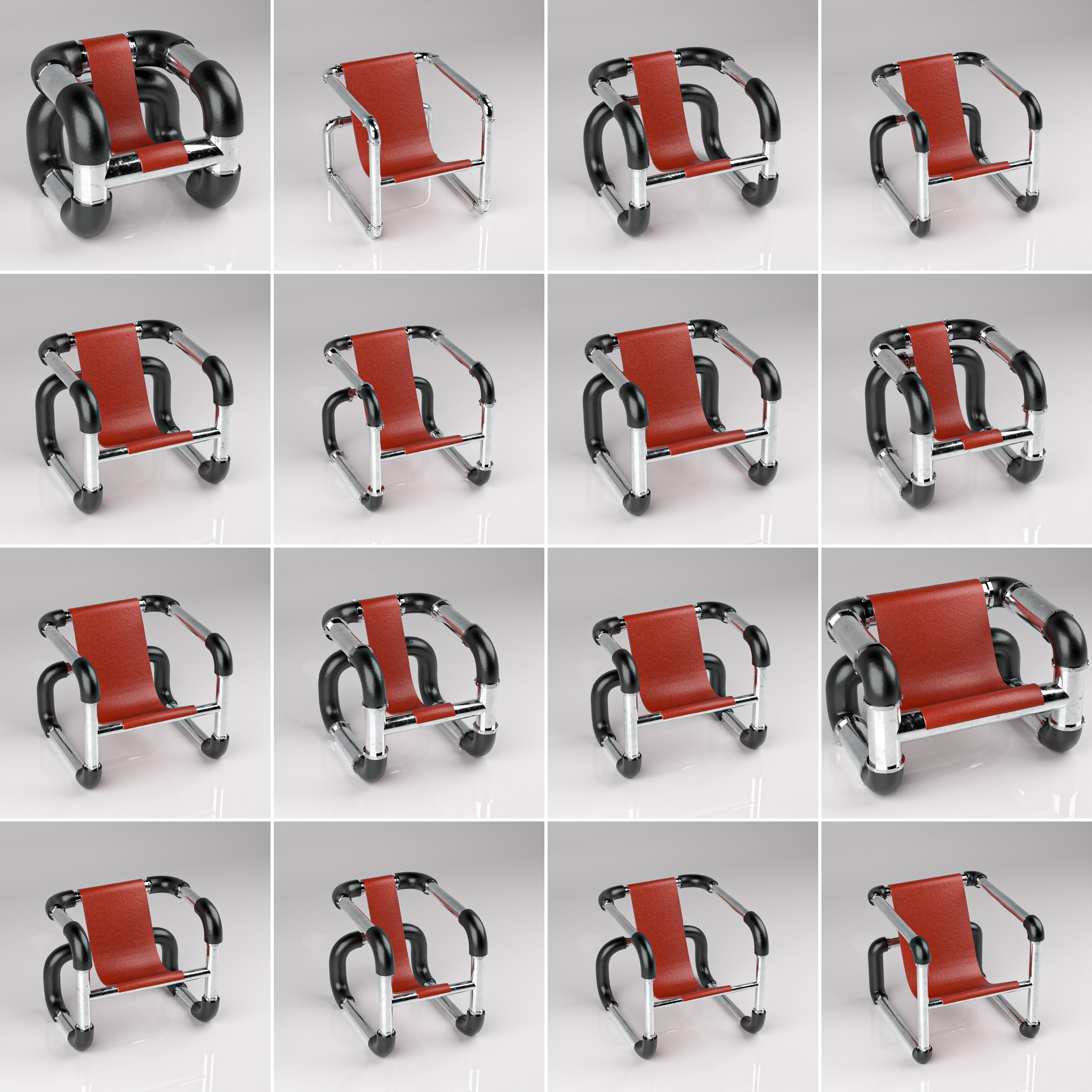
System for Variations
Two Houdini studies—Procedural Pipe Chair and Procedural Architecture—explore design as a family of related outcomes rather than a single fixed object. Starting with a shared procedural model, each variation carries the parameters that generated it and the attributes that describe its geometry. The studies investigate how Procedural Dependency Graphs can organize this information into a searchable catalog, connecting generated form to dimensions, area, component choices, and other criteria. Together, they frame a workflow for selecting an appropriate design for a particular brief: define the rules, generate alternatives, measure the results, and evaluate their fit without losing the reasoning behind each variation.
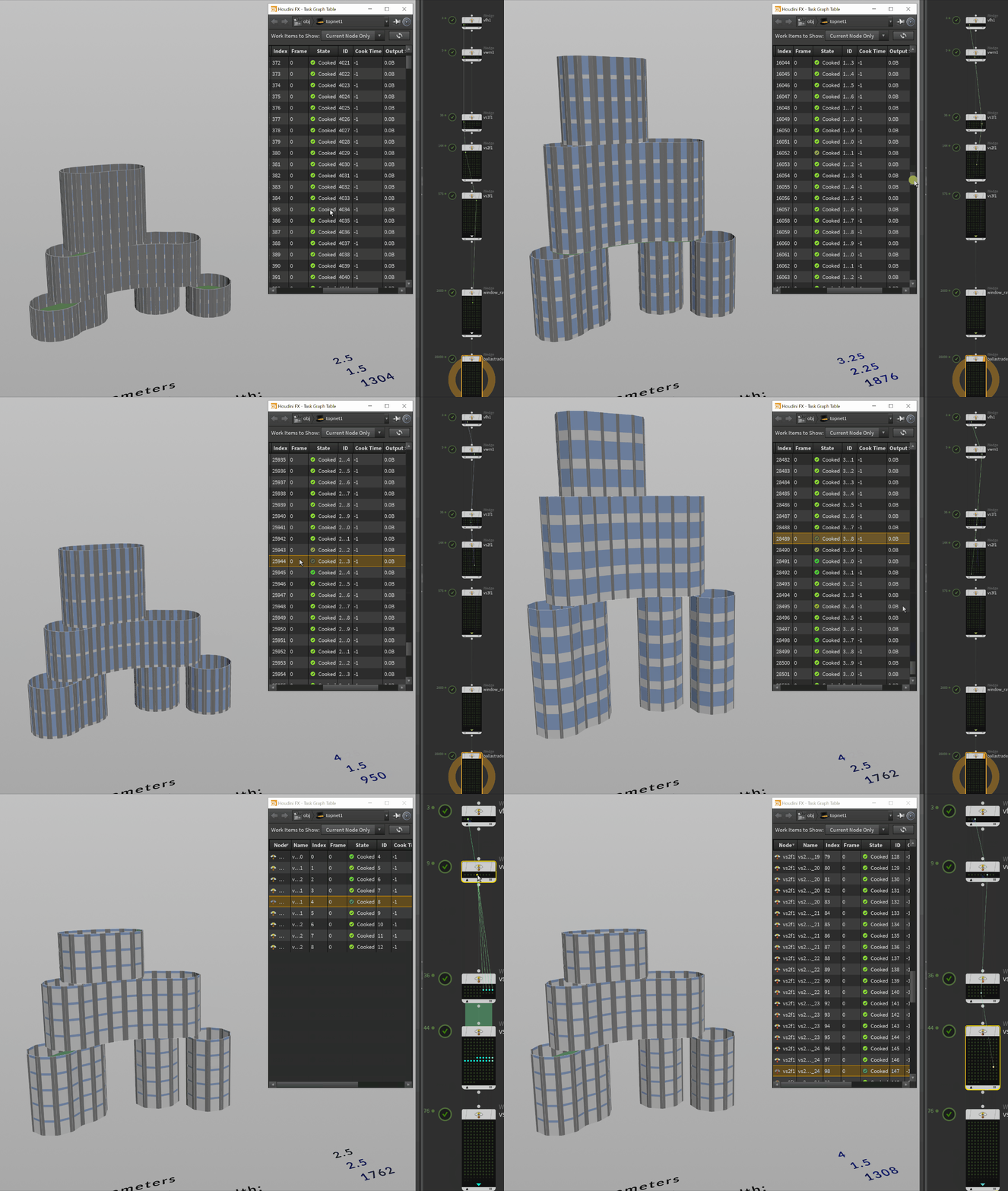
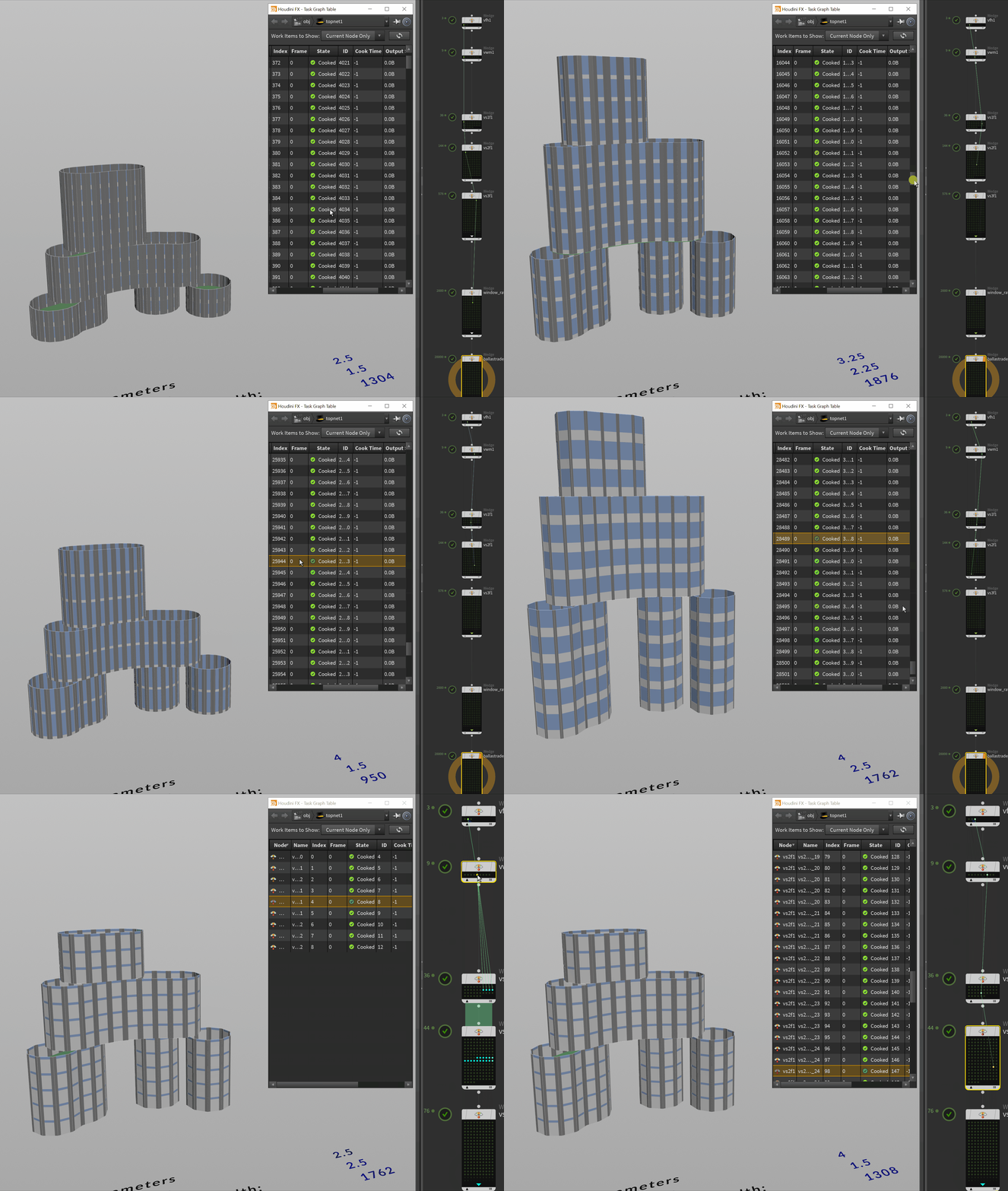
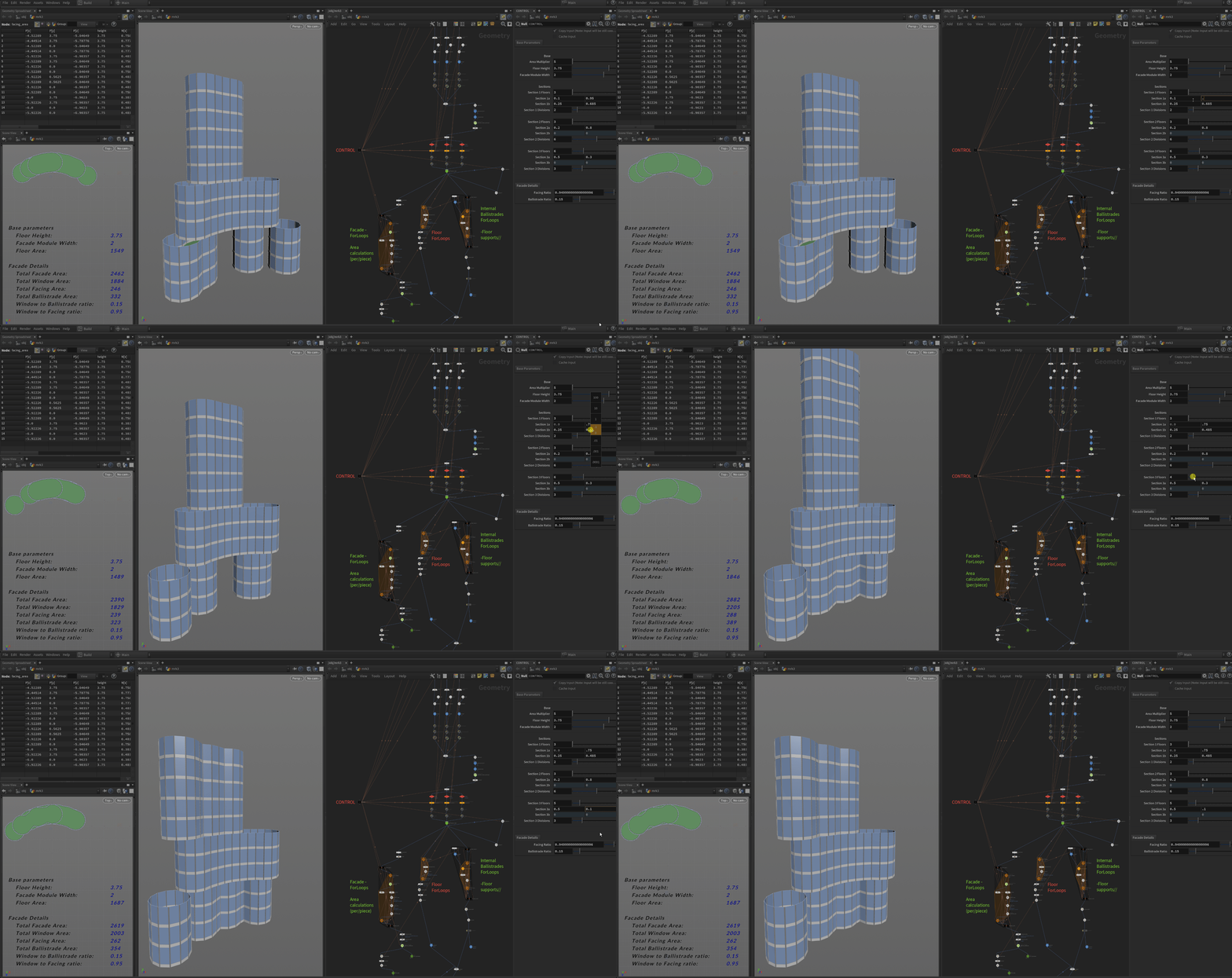
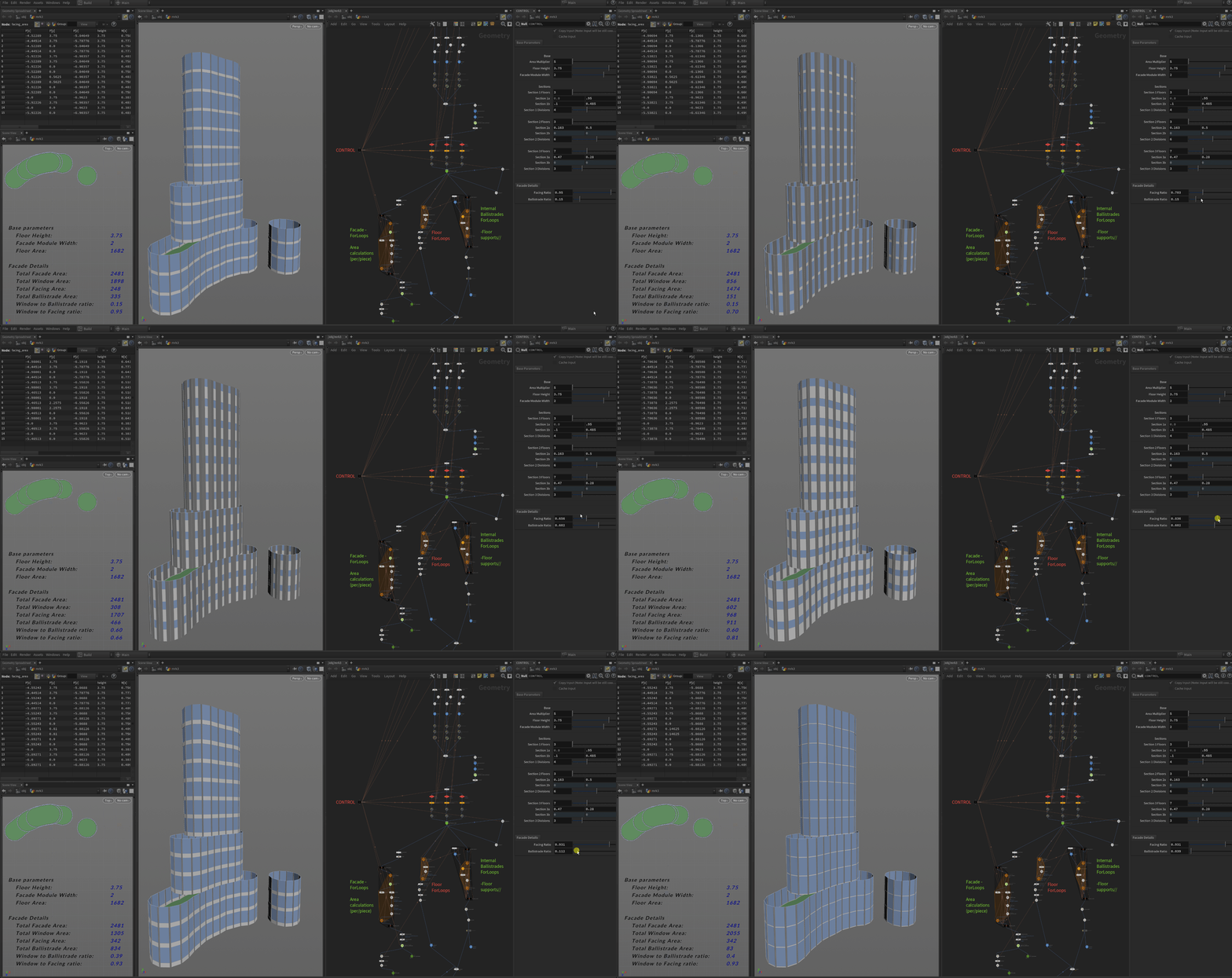
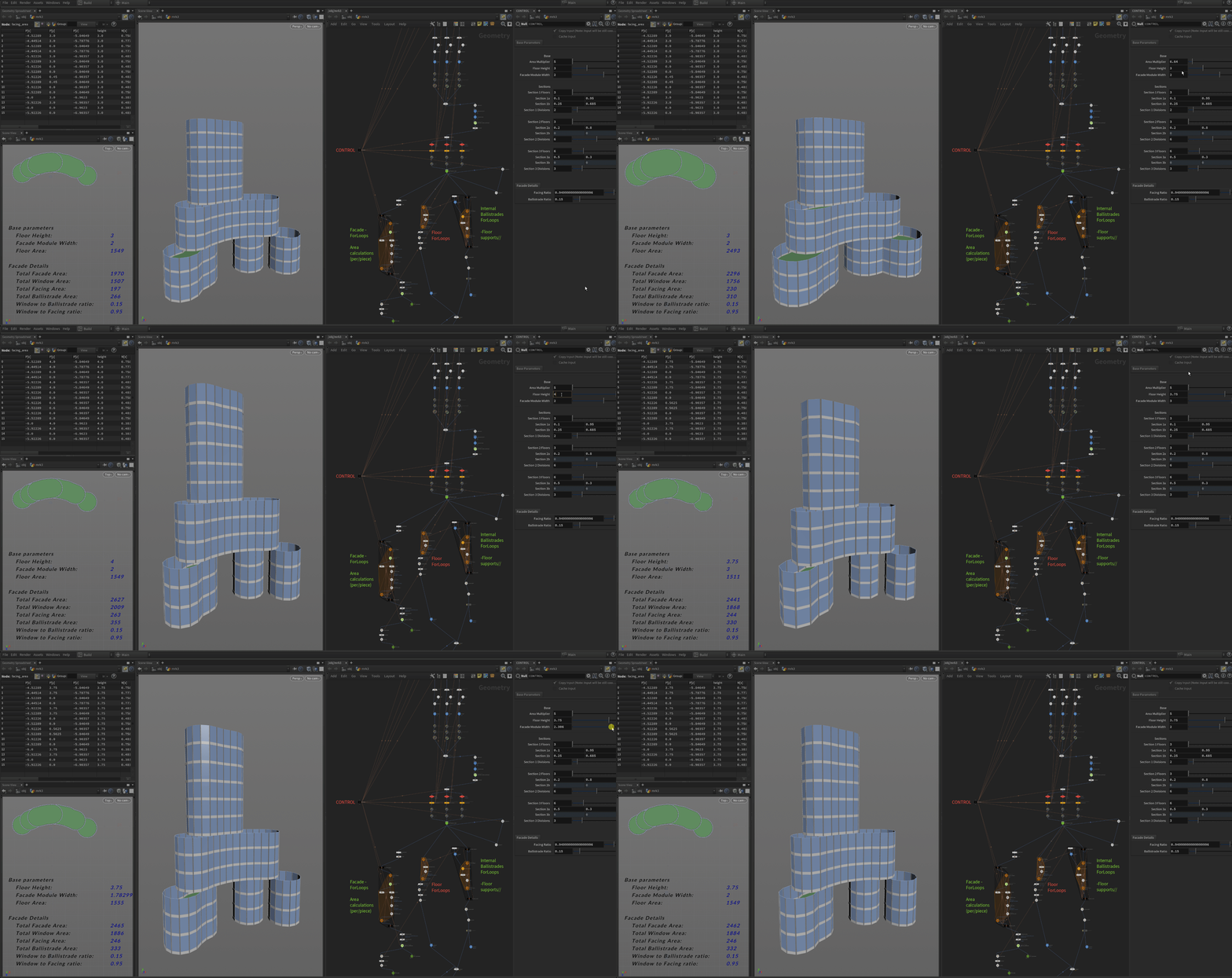
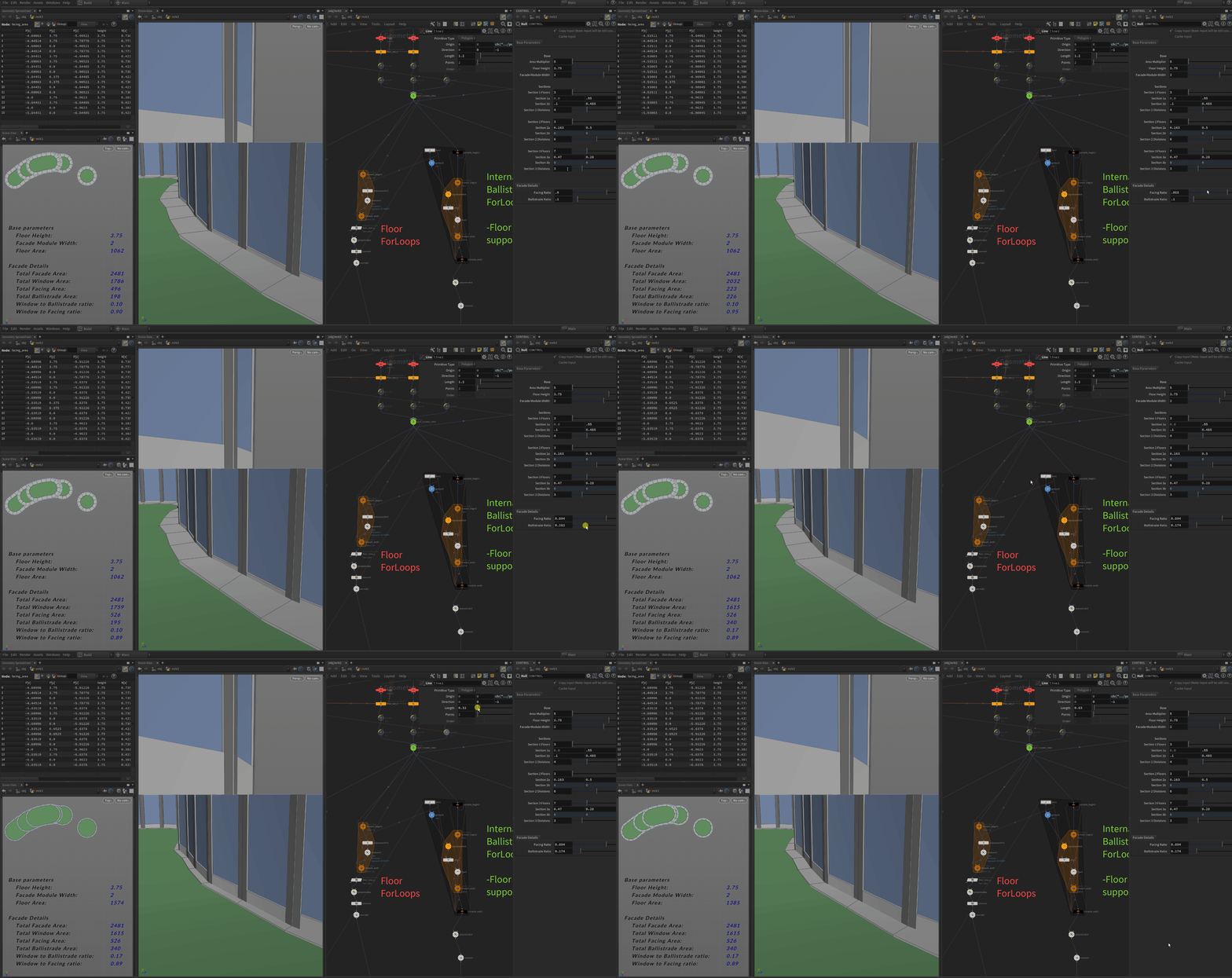
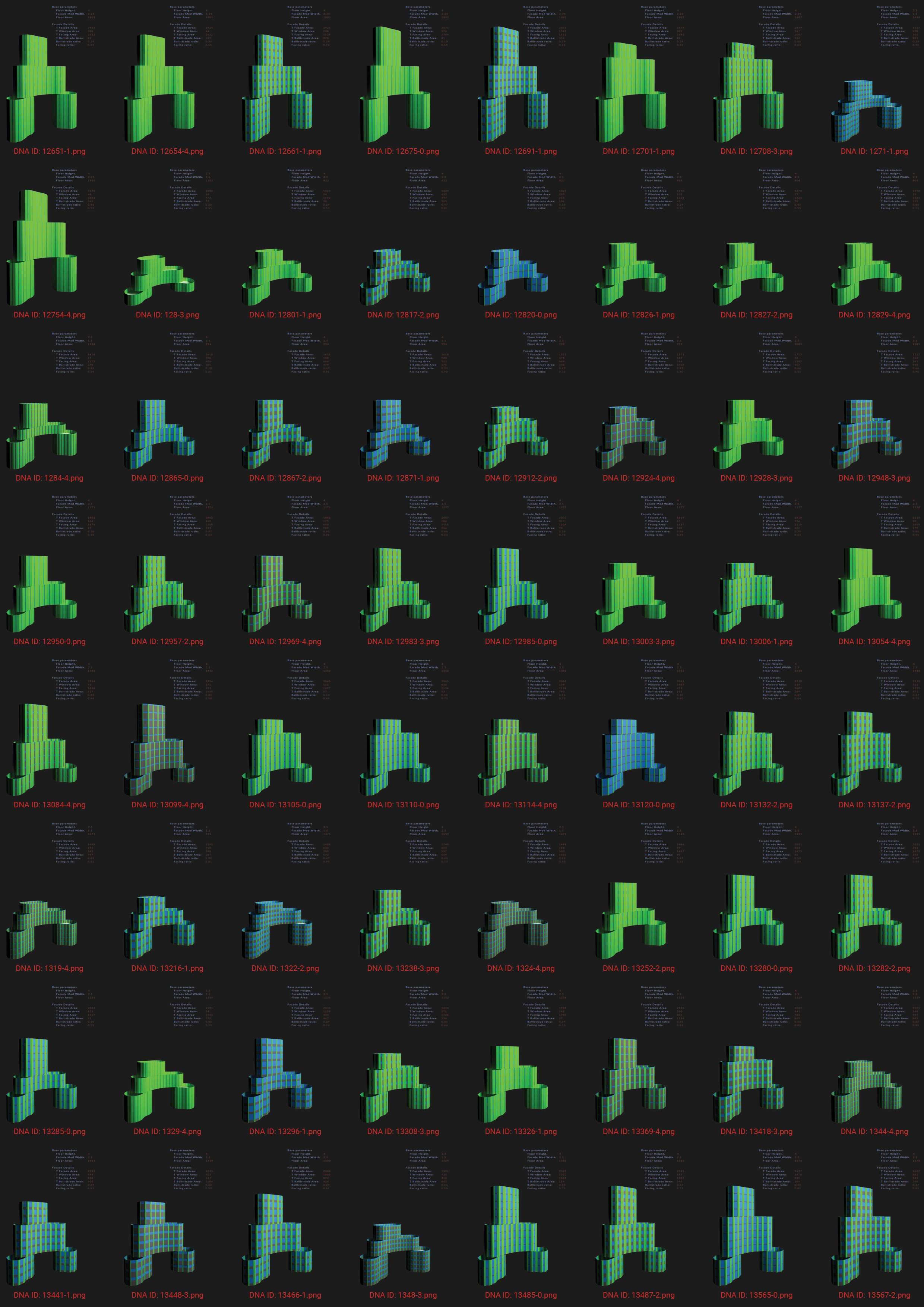
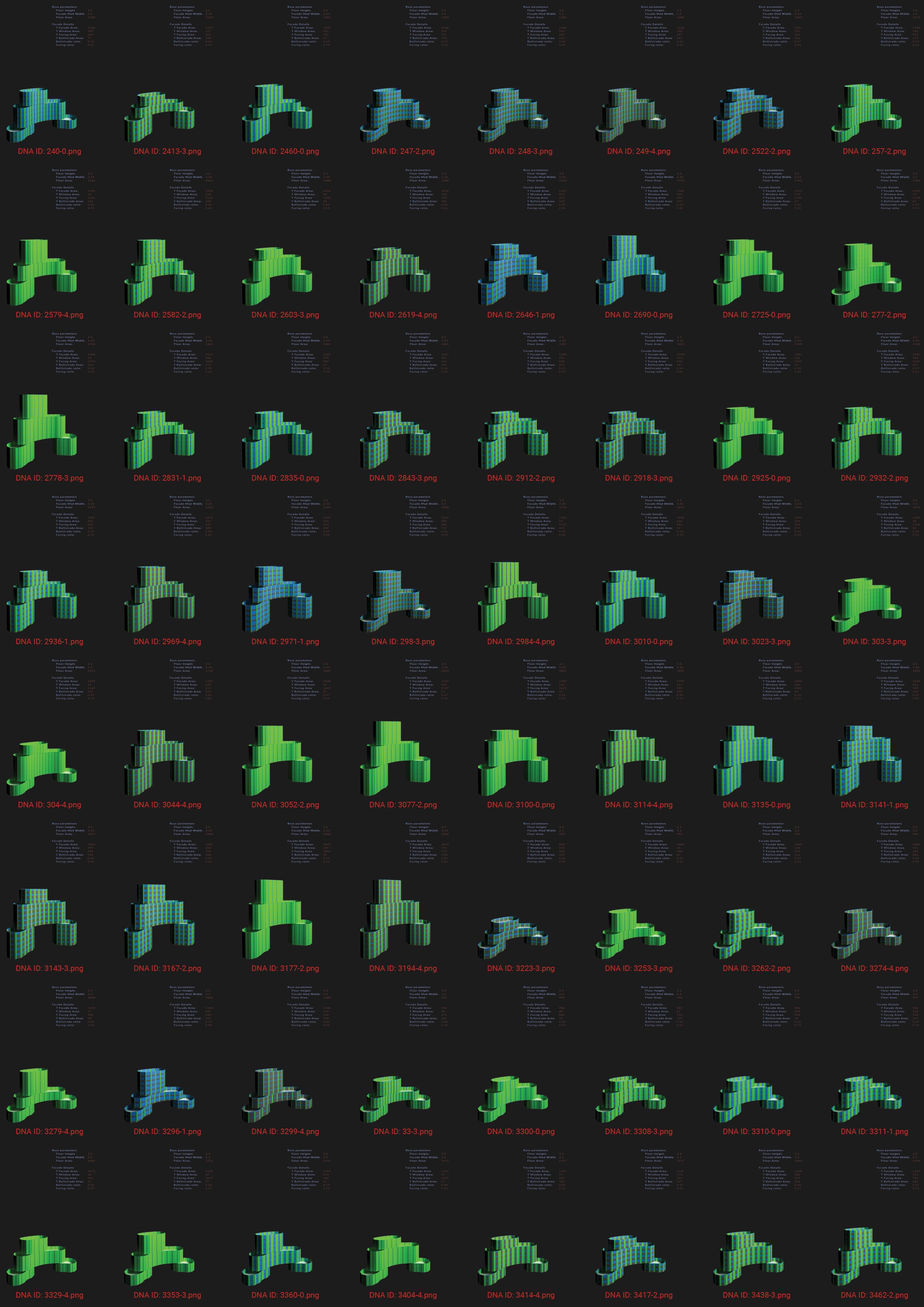
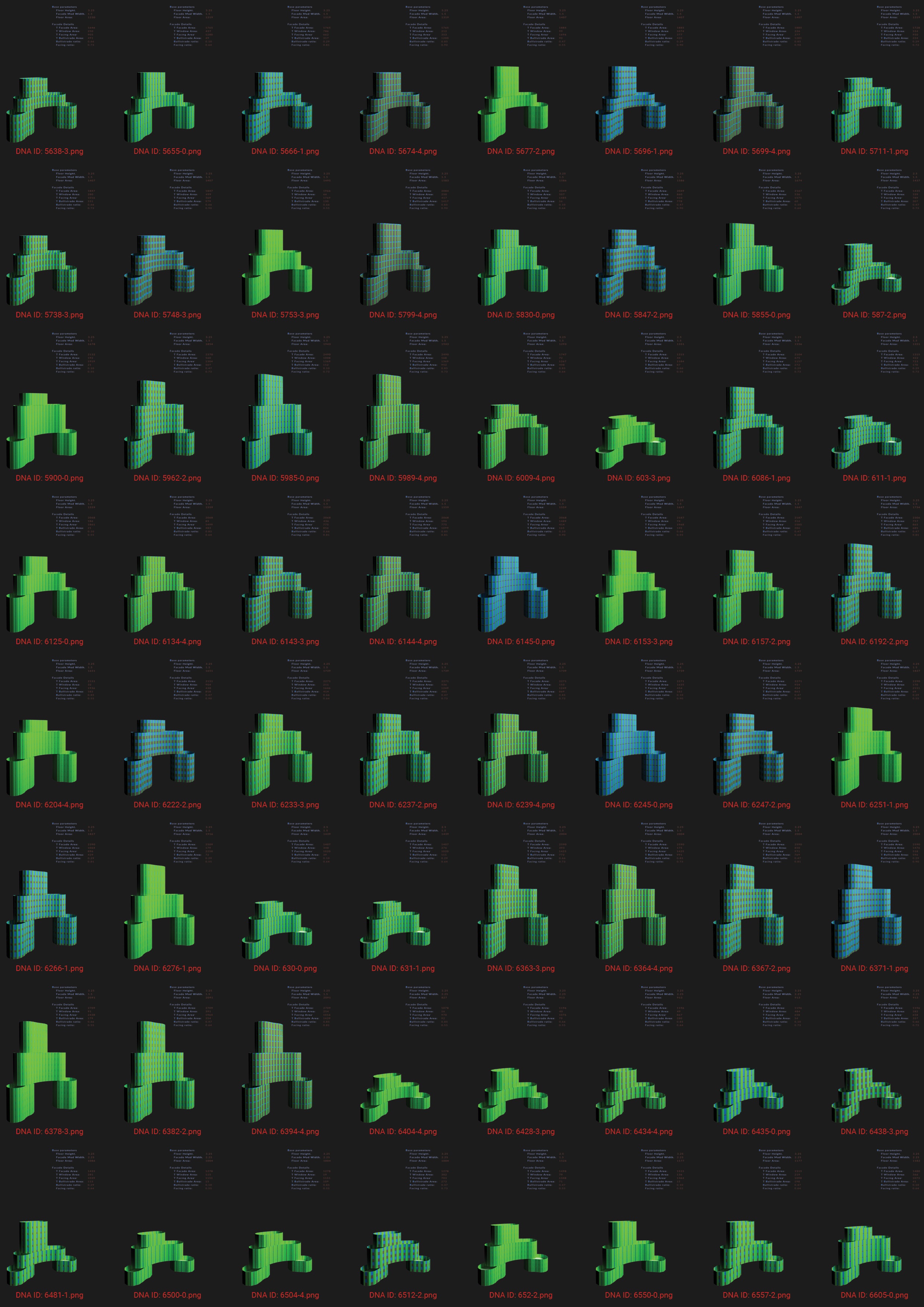
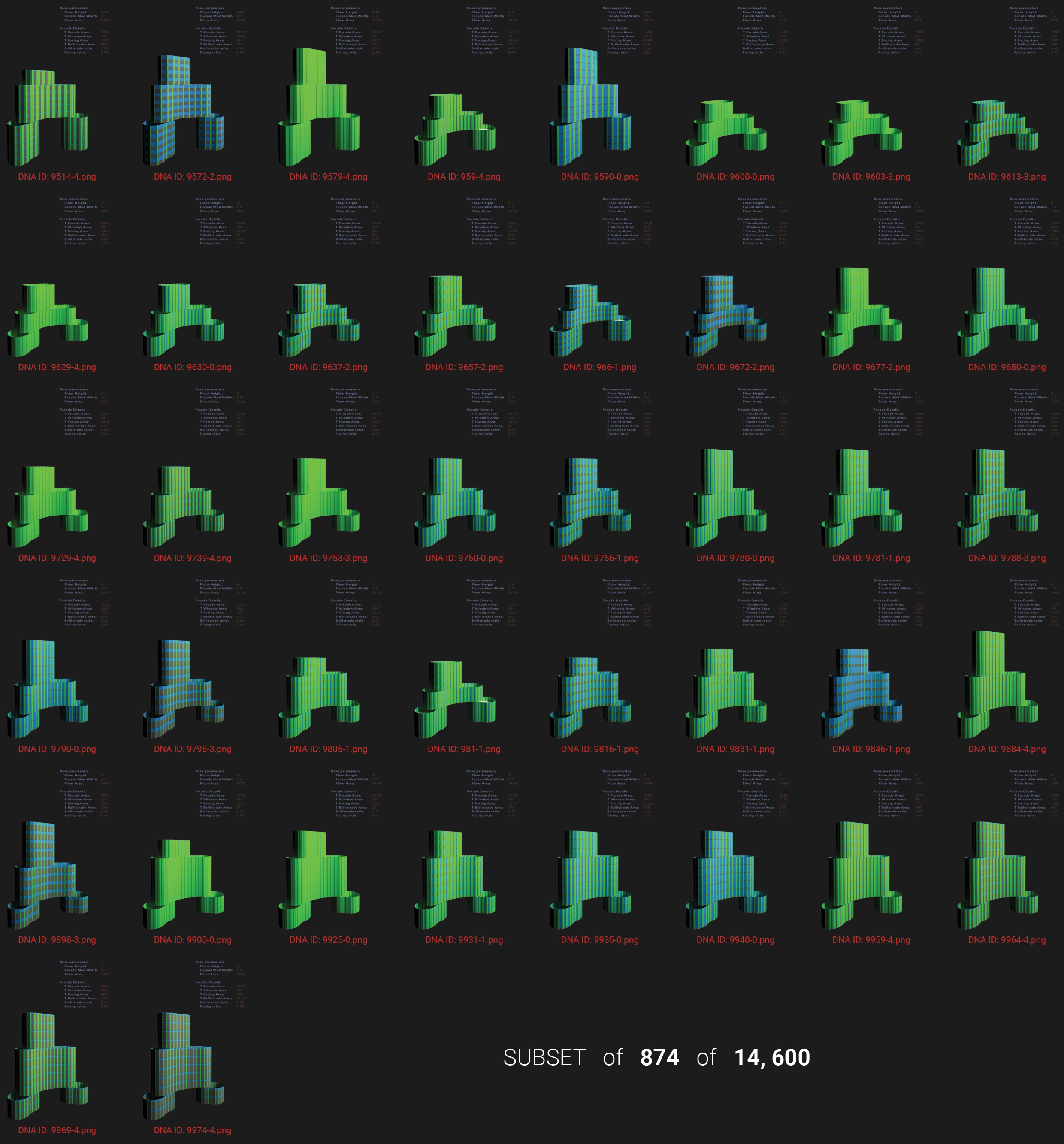
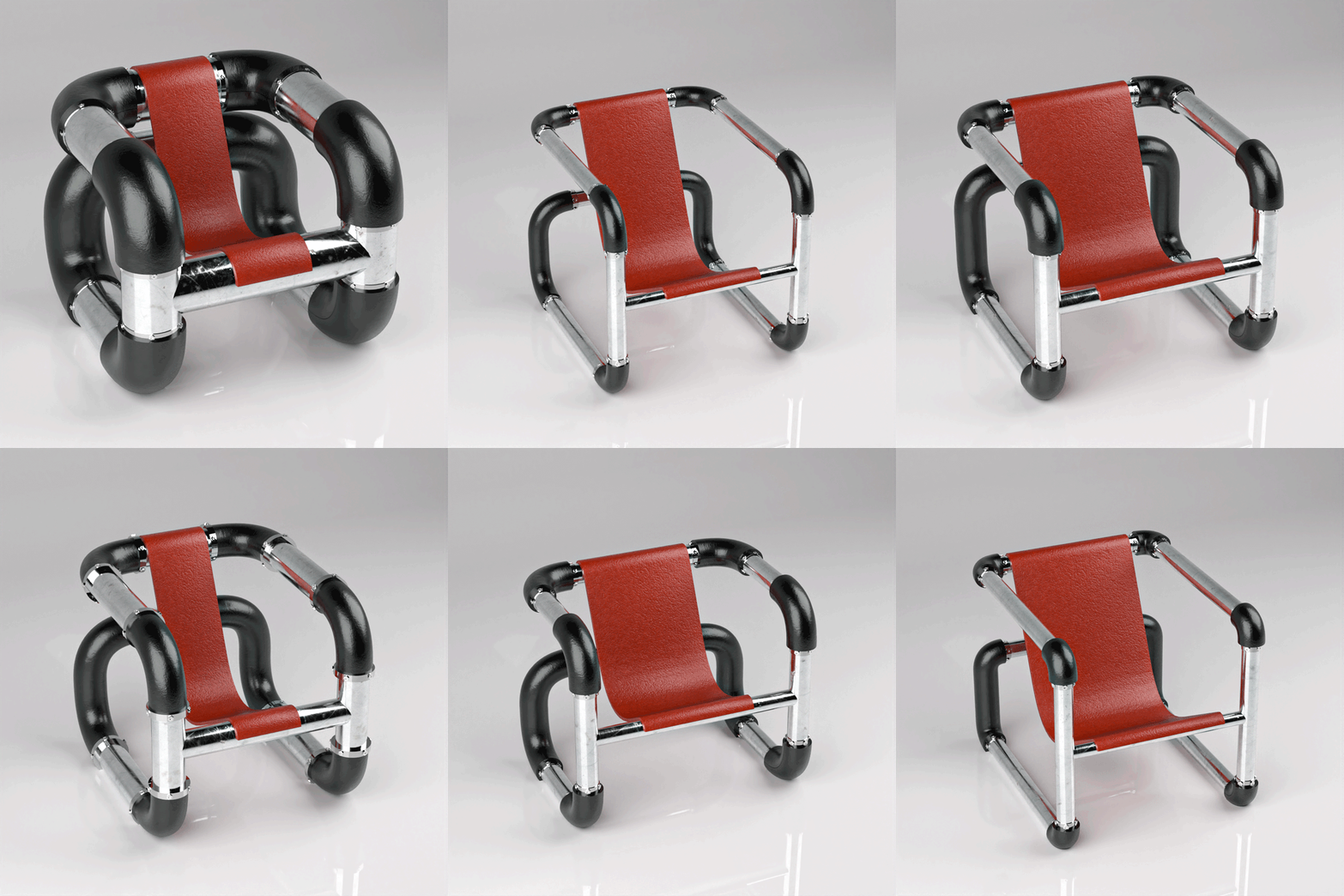
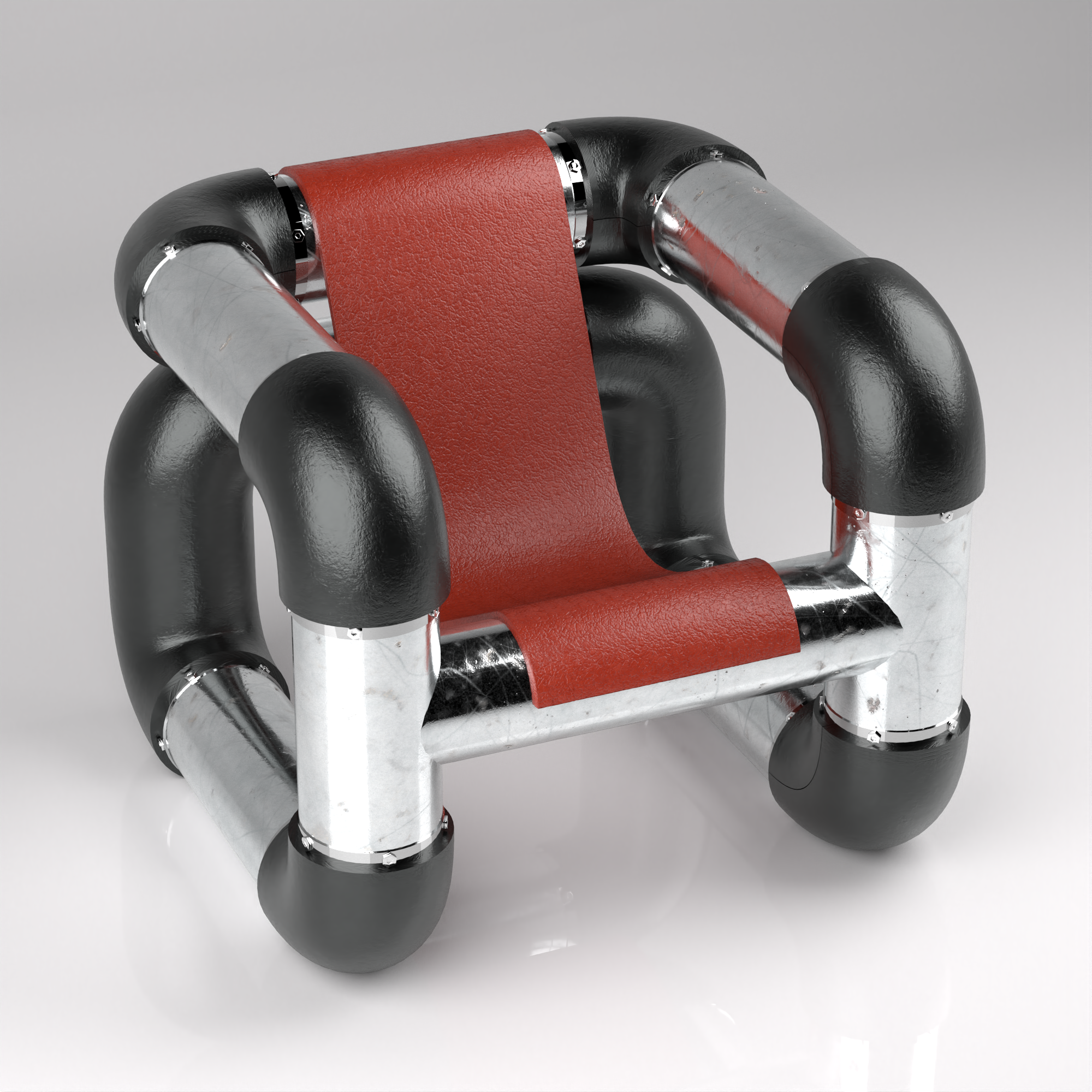
Designing the family, not only the object The Procedural Pipe Chair and Procedural Architecture studies began at different scales, but asked a similar question: what changes when the design is a system capable of producing alternatives, rather than one finalized shape? For the chair, that meant adapting a recognizable assembly to different dimensions, component choices, and individual preferences. For architecture, it meant generating related building configurations while retaining control over floor arrangements, façade modules, and geometric proportions. The shared ambition was to connect variation to information. A generated model should retain the values that produced it, the measurements that describe it, and a reference that allows it to be found again. Hundreds of alternatives become useful only when they can be compared against a particular requirement. This post brings together the two studies using 01/2020 , the earlier project date. The chair study followed in 04/2020 . The original experiments document parameterized geometry and catalogs of outcomes; the evaluation framework below also develops their implications and identifies what a more complete system would require. A shared construction logic produces a family of chairs with different proportions and component configurations. PPC — Procedural Pipe Chair PPC was inspired by Lucas Muñoz's chair made from industrial pipes. My study explored how a similar component-based language could become a procedural system, varying the design while retaining a recognizable identity. The recorded controls include pipe radius, corner fillets, seat size, and overall dimensions . Changes propagate through the assembly rather than requiring every component to be remodeled individually. The intention was to accommodate different spatial needs, available components, manufacturing contexts, and personal preferences within a defined framework. The chair's proportions and components change within the procedural definition. The project description also identifies weight, strength, materiality, and functionality as potential selection criteria. These are design ambitions, not automatically verified properties of a rendered variant. A pipe radius is a geometric input; load capacity requires material, connection, and structural evaluation. A visually plausible chair still needs fabrication and use testing. The important shift was therefore not simply making a model adjustable. Each iteration could carry its own parameter record, allowing a catalog to be searched by requirements rather than browsed only by appearance. Procedural Architecture — the same idea at building scale The architectural study applied this approach to a non-linear building form defined through curves and points. Moving curve endpoints and changing divisions altered the underlying organization, while additional controls affected the building's sections and component systems. The source material identifies several groups of parameters: Form and section: curve endpoints, curve divisions, and floors per section. Floor organization: floor-area multiplier and floor height. Envelope articulation: façade module width, facing-to-glass ratio, and balustrade-to-glass ratio. The model also tracked attributes including floor area and façade area. These measurements made it possible to describe the consequences of a parameter change instead of evaluating only its visual effect. The architectural system varies its configuration while keeping a shared procedural structure. Promoted controls make selected relationships available at a higher level, while additional dependencies remain inside the model. An architectural model introduces requirements that a geometric study does not resolve on its own: circulation, structure, servicing, daylight, accessibility, and site constraints. The experiment established a way to generate and describe alternatives, not a complete building-design solution. Why a PDG network matters Houdini's Procedural Dependency Graph (PDG) organizes tasks and the relationships between them. Through Task Operators (TOPs) , it can coordinate parameter variations, geometry generation, measurement, caching, and rendering. The model defines how a design is constructed. The task graph defines what needs to be done for each candidate and which results must exist before later tasks can proceed. That separation becomes valuable when a study moves beyond one interactive model to many related outcomes. The architectural catalog plates make the intention visible: variants are presented with a DNA ID and accompanying data. Here, “DNA” means the descriptive record associated with an iteration. It does not imply that the system is a genetic algorithm or that the alternatives were evolved through selection and mutation. The catalog links each visible outcome to an identifier and a data record. PDG does not make a design optimal simply by generating work items. Its role is to make the production and handling of alternatives explicit. Evaluation still depends on the attributes being measured and the rules used to interpret them. A workflow for generating and cataloging outcomes The following workflow develops the cataloging ambition of the two projects. It is a proposed structure for a reproducible system, rather than a claim that every stage was fully implemented in the archived studies. 1. Define the design variables The first task is to decide what may change and what must remain consistent. Useful controls describe meaningful design relationships rather than exposing every internal parameter. For PPC, a variation might specify seat width, seat depth, pipe radius, and corner treatment. For the architectural model, it might specify section floor counts, floor height, and façade module width. Related dimensions should be linked where the construction logic requires them to agree. Bounds also matter. A pipe radius that is mathematically valid may not correspond to an available component. A façade module should not be allowed to become arbitrarily narrow if that breaks the intended assembly. Where manufacturing uses standard sizes, sampling a list of available values is more meaningful than sampling an unrestricted numerical interval. 2. Generate parameter combinations A Wedge TOP provides a way to generate work items with varying attribute values. These values can drive the procedural model through an asset-processing stage. Each work item then represents a candidate configuration to be evaluated. Sampling should reflect the question being asked. A small, structured grid is useful when comparing the effect of particular variables. Randomized sampling can explore a broader space, provided the seed and actual values are recorded. Neither is a substitute for thinking about coverage. For example, four choices for each of five independent variables produce 4⁵ = 1,024 combinations. That is an illustrative count, not the recorded size of either project. As the number of variables grows, exhaustive combinations become expensive. A staged study can first explore broad ranges, then sample more carefully around promising families. 3. Cook geometry and record validity Each candidate passes its input values into the procedural model. The generated geometry should be checked before treating it as a valid alternative. Relevant checks might include missing geometry, self-intersection, disconnected components, invalid dimensions, or failed component relationships. A chair with an unresolved connection should not receive a favorable score because it happens to use little material. Similarly, a building that fails to generate some floors should not appear efficient because its façade area is low. Failures should remain visible in the record with a reason. Otherwise, silently removing failed cases can make a parameter range appear more robust than it is. 4. Measure outputs as well as inputs Input parameters explain how a candidate was generated. Output attributes explain what was actually produced. These are related, but they are not interchangeable. For example, a floor-area multiplier is an input; the resulting floor area is a measurement. A selected pipe radius is an input; an assembled bounding box is a measurement. An estimated mass would be a derived quantity requiring additional assumptions about material and section geometry. A practical candidate record should separate these categories: Record category PPC example Architecture example Identity Candidate ID and model version Candidate ID and model version Input parameters Pipe radius and seat dimensions Floor height and module width Measured geometry Overall width and depth Floor area and façade area Derived estimates Mass, if section and density are known Envelope-to-floor-area ratio Validity Connection and geometry checks Floor and module generation checks Review status Fabrication or use-testing notes Spatial and technical review notes These fields describe a proposed catalog schema. They should not be read as evidence that mass, structural performance, or architectural compliance was calculated in the original experiments. 5. Keep geometry, data, and previews connected A usable catalog needs more than a contact sheet. Each candidate should point to its geometry cache, preview image, input record, measured attributes, and evaluation result. A persistent candidate key helps reconnect these outputs. For reproducibility, I would record the model version, parameter values, sampling seed where relevant, and measurement definitions. A graph's current work-item index is useful within a run, but should not be the only identifier used to track a design across regenerated batches. The same principle applies to caching: a preview from an older model version should not be paired with new measurements. Shared identifiers and versioned output locations reduce that ambiguity. Catalog plates make broad comparisons possible; the associated attributes make those comparisons searchable. Finding the appropriate fit Generating a large catalog does not answer which design to choose. That requires an explicit brief and a distinction between hard requirements , preferences , and unverified qualities . Filter hard constraints first Hard requirements determine whether a candidate is eligible. A chair may need to fit a specified envelope and use available pipe sizes. An architectural option may need to fall within an area range, stay below a height limit, and preserve a required relationship between sections. These conditions should be checked against the appropriate inputs or measured outputs, with defined units and tolerances. In PDG, a Filter by Expression TOP can retain candidates matching an eligibility condition. Conditions that depend on geometry must be evaluated after the necessary measurements exist. A conceptual architecture filter might read: eligible = geometry_valid AND floor_area within the brief's permitted range AND building_height <= permitted_height AND module_width belongs to the available component set This is pseudocode for the decision logic, not a ready-to-run TOP expression. Missing measurements should be marked as unresolved rather than silently treated as zero or as a pass. Compare preferences among eligible candidates Preferences help order the options that remain. Examples could include proximity to a target area, a preferred proportion, or a lower envelope-to-floor-area ratio. These are choices about the brief, not universal definitions of good design. If several criteria are combined, their units and scales must be handled deliberately. One possible method is to express each deviation relative to an agreed tolerance: area_penalty = abs(measured_area - target_area) / area_tolerance height_penalty = abs(measured_height - preferred_height) / height_tolerance combined_cost = w_area * area_penalty + w_height * height_penalty The tolerances must be positive, and the weights need to be recorded. Otherwise, the score conceals a subjective judgment behind a numerical result. An area measured in square metres should not be added directly to a dimension in millimetres and interpreted as a meaningful comparison. Where priorities conflict, it is often more useful to retain a set of alternatives than select one winner. A compact architectural option and an option closer to a desired floor area may both merit review. Likewise, a visually preferred chair may require a less convenient component inventory. The catalog should expose those trade-offs. Group results into families Grouping complements ranking. A Partition by Attribute TOP can organize work items by shared attribute values, such as a component family or façade-module category. Continuous measurements may need explicit bins before grouping. This allows a designer to ask more useful questions: which eligible option performs best within each component family, or which configurations meet the area requirement without changing the selected façade system? The catalog becomes a way to compare coherent alternatives, rather than a single ordered list that may contain many near-duplicates. Repeated catalog views document a family of related configurations rather than one predetermined outcome. Returning from the catalog to the model Selection should preserve a route back to the procedural definition. A shortlisted candidate needs to be reproducible from its recorded values so it can be inspected, refined, and tested. This is particularly important when manual intervention enters the process. Moving a building section or adjusting a chair connection may be a valid design decision, but it changes the candidate. The revised geometry should receive updated measurements and a new revision record rather than inherit the earlier score without re-evaluation. The original architectural notes raised this question directly: how much manual input can a procedural system accommodate while retaining its dependencies? My view is that the useful boundary is not between manual and procedural work, but between changes the system records and changes it can no longer explain. What these studies suggest PPC and Procedural Architecture explored a common design method at different scales: define a generative logic, attach information to its outcomes, and use that information to make selection more deliberate. The distinction is a workflow emphasis, not a claim that ordinary parametric tools cannot perform similar tasks. What PDG adds is a way to express the dependencies between generation, measurement, evaluation, and output production across many candidates. The strongest version of this system would make every shortlisted alternative inspectable: what generated it, what was measured, which requirements it satisfies, and what still needs human or physical evaluation. A catalog then becomes more than an archive of forms. It becomes a record of why a particular variation fits a particular situation. Project credit and technical references PPC design precedent: the industrial-pipe chair by Lucas Muñoz, credited in the original project. PPC is a procedural variation study inspired by that work. SideFX — Wedging attributes . Reference for driving model variations through work-item attributes. SideFX — Using attributes . Reference for attribute-driven task evaluation. SideFX — Filter by Expression TOP . Reference for filtering candidates against conditions. SideFX — Partition by Attribute TOP . Reference for grouping candidate records.